SKY46 – Khả năng chữa bệnh của rau bắp cải

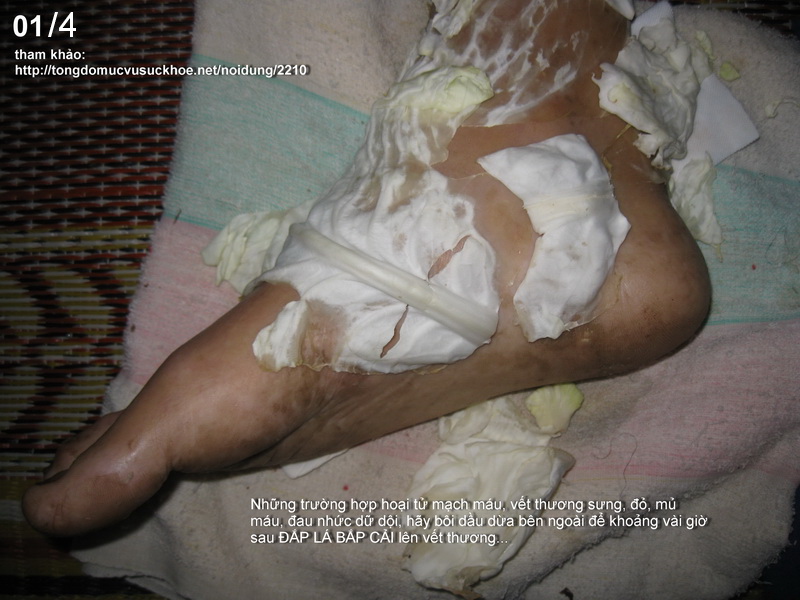

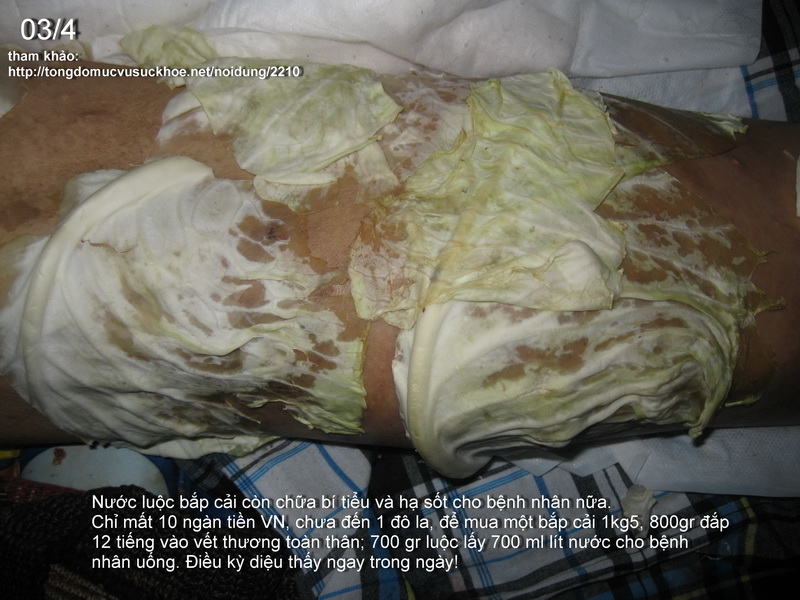

Sau khi bạn đọc xong bài này, thì khi ngồi ở bàn ăn lần tới, bạn sẽ nhìn đĩa rau BẮP CẢI với sự trân trọng và sự hiểu biết về đặc tính giúp cơ thể tự chữa lành thật không ngờ của bắp cải.Tiến sĩ Blanc viết như sau vào năm 1881: “Vào năm 1880, một người đánh xe ngựa ở một làng nhỏ nước Pháp bị ngã xuống đất, và bánh xe cán qua chân anh. Tai nạn này thường xẩy ra vào thời bấy giờ. Hai bác sĩ cho rằng cưa chân là việc cần thiết phải làm. Một bác sĩ giải phẫu được mời đến hội ý, ông đồng ý, và cuộc giải phẫu ấn định vào sáng hôm sau. Nhưng lúc 5 giờ chiều hôm đó, cha sở, Loviat Claude, khuyên mẹ anh lấy lá bắp cải đắp vào chân bị thương cho anh. Hiệu qủa kỳ diệu là anh ngủ ngon suốt đêm. Khi anh vừa thức giấc, cũng là lúc các bác sĩ đến để sửa soạn cho việc cưa chân, họ nhận thấy anh có thể di chuyển chân được. Lớp bắp cải được lấy ra để lộ bắp chân không còn sưng nữa và màu sắc cũng khá hơn. Tám ngày sau, chân anh khỏi hoàn toàn và anh đi làm trở lại.” Bắp cải thông thường đã góp phần quan trọng cho sự sống của con người hơn 4000 năm. Dược tính của bắp cải, căn cứ trên kinh nghiệm thực tế, có nền tảng khoa học. Hippocrates nói rằng các y bác sĩ không nên ngần ngại theo ý kiến của dân gian những gì hữu ích cho y học. Bây giờ chúng ta biết rằng y học truyền thông dân gian về bắp cải đã đã đứng vững với thời gian và thử nghiệm khoa học. Hai báo cáo y học khác sử dụng bắp cải đáng chú ý: -Một thợ làm đồng hồ bị nấm eczema ở cả hai bàn tay đau nhức nhiều trong một năm khiến anh không thể làm việc được. Hai bàn tay bị viêm cấp tính, móng tay tách khỏi nền móng, muốn rụng ra. Đắp lá bắp cải cho anh hai lần mỗi ngày, trong vài ngày đã giúp giảm đau, vì dòng nước trong được rút vào trong thuốc lớp đắp. Tiếp tục đắp như vậy trong hai tháng, anh được khỏi hẳn. -Năm 1875, một ông 75 tuổi bị hoại tử mạch máu ở bắp chân và bàn chân bên phải. Da đã đen lại và phía trước bàn chân đang thối rữa. Người ta dùng lá bắp cải đắp chung quanh chân, da chân đã đổi từ màu đen sang màu nâu rối màu đỏ, sau cùng trở về màu khỏe mạnh tự nhiên. Ba tuần sau, bác sĩ Blanc viết trong hồ sơ là anh đã tiến triển đáng kể. Vẫn chưa khám phá vì đâu lá bắp cải có được tính chất chữa lành qúy gía như vậy. Chúng ta chỉ biết rằng lá bắp cải có sức rút máu mủ cách đặc biệt. Nhờ rút ra được chất độc lỏng từ những vùng nhỏ, mà bắp cải đẩy mạnh sự chữa lành và làm liền da, vì vậy ngăn ngừa được các biến chứng phức tạp. Thành tích lâu dài trong lịch sử qua việc chữa trị dùng lá bắp cải, với nhiều bệnh khác nhau, từ những thương tích đơn giản đến phức tạp, đau thấp khớp, đau dây thần kinh mặt, nhức đầu, loét chân, bệnh than (anthrax), và nhiều bệnh khác. Bắp cải tươi sống trong món salad, nước ép, hoặc hấp, đều có các đặc tính trội vượt hẳn cho rất nhiều loại bệnh khác nhau. Hippocrates đặc biệt ưa chuộng rau bắp cải. Khi bệnh nhân bị đau bụng dữ dội, ông liền cho toa ăn một đĩa rau bắp cải luộc với muối.
Erasistratus dùng bắp cải như phương thuốc hiệu năng để chữa bệnh tê liệt.
Pythagoras, và triết học gia khác, viết sách, trong đó họ đề cao các tính chất tuyệt vời của bắp cải.
Cato cho rằng bắp cải chữa trị mọi bệnh; và ông sử dụng nó như là một thuốc chữa bách bệnh để bảo vệ gia đình khỏi các bệnh dịch. Cato cho biết thêm rằng người La Mã suốt trong 600 năm dùng bắp cải mà không cần đến sự trợ giúp nào của thầy thuốc. Thầy thuốc phải đi nơi khác để sinh sống.
Người La Mã sùng bắp cải để chữa nhiều bệnh nội thương lẫn ngoại thương khác nhau như thuốc xổ, thưốc khử trùng, thuốc đắp. Lính La Mã đắp bắp cải lên vết thương của họ. Rembert Dodens, bác sĩ Hà Lan thời Maximilian II, và Rudolph, năm 1557 đã viết trong quyển ‘History of Plants – Lịch sử các loài thực vật’ như sau: “Nước ép bắp cải làm mềm bụng và giúp dễ xổ. Nó làm sạch và chữa trị những vết loét cũ. Nước ép bắp cải trộn với mật ong là xi-rô chữa khàn giọng và ho. Lá, khi nấu chín đắp trên các vết loét mãn tính (chronic ulcers), làm dịu và chữa lành chúng, và hỗ trợ trong việc làm tan bướu và làm lành các vết thương. Các bác si ngành Y ở Paris đã viết vào năm 1829 (Universal Dictionary of Materia Medica): “Bắp cải là một trong các thứ mua dùng có giá trị qúy báu nhất của con người. Nó chống lại bệnh còi do thiếu vitamin C (scurvy), nó ngăn chặn bệnh gút, các lá non mềm được đắp lên các vết thương và hạt trị giun sán.” Một bác sĩ trong những năm của thế kỷ XIX đã phòng ngừa cho ông và gia đình qua nhiều năm chống lại các bệnh dịch mùa đông nhờ ăn rau bắp cải luộc hàng ngày. Ông đề nghị cách chữa cảm lạnh và viêm thanh quản như sau: 500 g nước ép bắp cải đỏ, 3 g nghệ, 250 g mật ong và đường, tất cả nấu lên cho thành xi-rô. Mỗi lần uống 1 muỗng canh hòa trong một ly nước trà, ngày 3-4 lần. Tiến sĩ Blanc viết: “Bắp cải là liệu pháp chữa trị cho người nghèo, không gì đơn giản hơn bắp cải. Dùng đắp bên ngoài rất dễ, hiệu qủa nhanh chóng và không có hại. Người ta có thể thấy ngay được tận mắt. Các lợi ích rất nhiều, và tôi thách bất cứ ai tìm ra một lý do nào chính đáng cho việc không nên dùng bắp cải trong trị liệu.”
Việc chuẩn bị bắp cải như sau:
Rửa lá hoặc ngâm vài phút trong nước được vắt vào một lát chanh. Lau khô, dùng dao hay kéo cắt bỏ phần sườn cứng ở giữa.
Nếu muốn đắp lên vết loét hay vết thương nhạy cảm: dùng cái chày hay chai nước lăn tròn trên lá cho lá dập ra, nước bắp cải sẽ chảy ra trên mặt, sẵn sàng để đắp. Một, hai hay ba lần đắp tùy theo tình trạng vết thương. Lấy miếng vải dầy phủ lên trên và tiếp tục việc đắp trong vài gìơ, thường là cả đêm, hay suốt ngày nếu đau nhức làm cho không ngủ được.Nếu vết loét sưng và ngứa, ngâm lá bắp cải trong dầu dừa, (hay dầu oliu, dầu mè) 30 phút. Việc này sẽ làm dịu mô viêm cũng như chống nhiễm trùng và hỗ trợ việc chữa lành. Khi đắp lá bắp cải trên vết thương nhiễm trùng, ung loét, hay nấm eczema rỉ nước nhớ đắp các lớp chồng lên nhau như lợp mái nhà để có chỗ cho máu mủ, chất lỏng chảy ra giữa các lớp. Khi điều trị đau lưng, đau khớp, hoặc các bệnh khác nhau do dây thần kinh hoặc bàng quang, thuốc đắp lá bắp cải giúp thuyên giảm nhanh chóng. Thuốc đắp được chuẩn bị như sau: nấu sôi 20 phút 2-4 lá bắp cải với 2 lát hành tây và 3-4 nắm cám gạo mì với 1 chút nước. Khi nước cạn, cho vào gạc băng và đắp nóng trong 1-2 giờ, hay cả đêm. (Không bao giờ đắp nóng lên vùng bụng đau nhức). Chỉ có bác sĩ mới chần đoán chính xác nguyên nhân của chứng đau bụng này, và đắp nóng lên vùng viêm ruột thừa hay nhiễm trùng buồng trứng có thể có hại). Bác sĩ Garnett-Cheney, giáo sư tại Trường Y khoa Stanford, xuất bản một báo cáo liên quan đến việc sử dụng nước ép bắp cải trong điều trị loét dạ dày. Trong 65 trường hợp được báo cáo, có 62 trường hợp được chữa khỏi vào cuối tuần thứ ba. Bắp cải được dùng để chữa bệnh thiếu máu của động vật thí nghiệm gây ra bởi một chế độ ăn uống chỉ dùng sữa. Trong nghiên cứu tại Đại học Texas. Tiến sĩ W. Shive chiết xuất từ bắp cải một chất mà ông gọi là Glutamine, hữu ích trong việc điều trị chứng nghiện rượu và loét dạ dày. Bắp cải có giá trị vô vàn đối với phụ nữ mang thai, cho bệnh nhân thiếu máu, mệt mỏi, nhiễm trùng, bị ký sinh trùng đường ruột, có sạn, và viêm khớp. Chúng tôi liệt kê một số bệnh mà bắp cải được sử dụng để chữa trị:
MỤN TRỨNG CÁ : Thoa lên mụn nước ép bắp cải trước nếu muốn, rồi đắp lá bắp cải. Ăn bắp cải hay uống nước ép cũng hữu hiệu.
NGHIỆN RƯỢU : Ăn bắp cải, hấp chín hoặc ăn sống và uống nước ép bắp cải.
THIẾU MÁU :Uống một hoặc hai ly nước ép bắp cải mỗi ngày.
PHỎNG : Đắp lá bắp cải nghiền trên vùng bị phỏng để giảm đau và gia tăng việc chữa lành.
XƠ GAN : Uống nước ép bắp cải và ăn bắp cải sống hoặc hấp chín.
VIÊM ĐẠI TRÀNG : Đáp 3 hoặc 4 lớp lá bắp cải trên bụng mỗi buổi tối băng lại để không rớt qua đêm. Đồng thời uống nước ép giữa các bữa ăn.
TÁO BÓN : Uống vài ly nước luộc bắp cải mỗi ngày.
TIÊU CHẢY : Đắp lá bắp cải trên vùng bụng ban ngày, đắp tiếp lớp mới băn đêm và uống nước bắp cải luộc.
NHỨC ĐẦU : Đắp lá bắp cải lên trán và sau gáy của em, để qua đêm. Đáp trên vùng gan cũng có thể là cần thiết.
CÔN TRÙNG CẮN : Xoa một lá bắp cải nghiền trên vết cắn.
BỆNH THẬN : Đắp lá bắp cải trên vùng thận suốt đêm và vài giờ trong ngày.
ĐAU BỤNG KINH NGUYỆT : Đắp lá bắp cải trên vùng bụng dưới trong vài giờ.
BONG GÂN: Buộc 3-4 lá bắp cải dầy chung quang vùng bị bong gân, để suốt đêm.
Lần tới khi bạn thấy cây bắp cải tầm thường, hãy nhớ rằng nhiều người qua nhiều thế kỷ đã dùng nó để được chữa lành các loại bệnh thể lý.
LM Hoàng Minh Thắng & Đình Tứ & Kim Tuyến
Chuyên viên thảo dược
BẮP CẢI CHẾ BIẾN RA NHIỀU MÓN ĂN

CANH CHUA BẮP CẢI

CANH BẮP CẢI CUỘN THỊT

MÓN NEM BẮP CẢI CUỐN.( hấp chín sau đó đưa vào lò nướng)
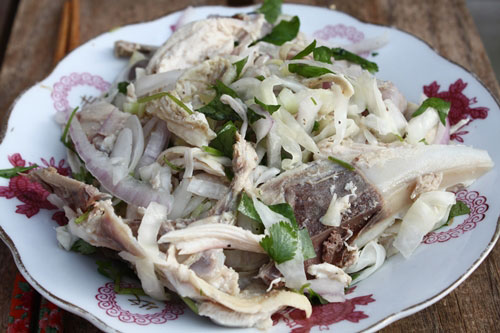
GỎI BẮP CẢI TRỘN VỚI THỊT GÀ XẺ NHỎ
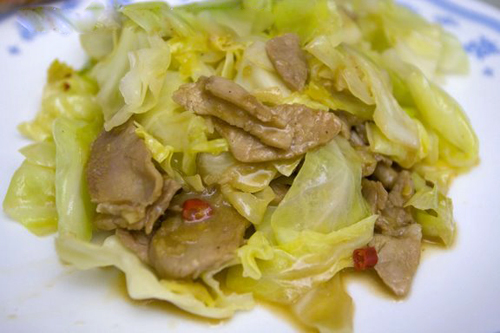
BẮP CẢI XÀO THỊT HEO.
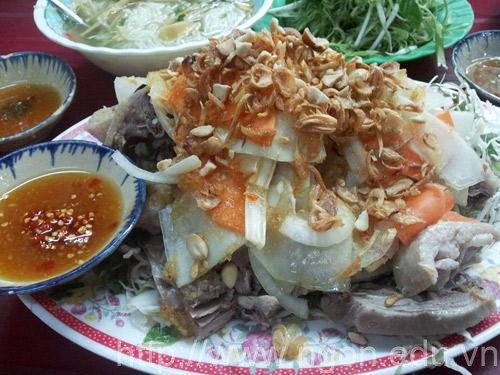
GỎI VỊT TRỘN BẮP CẢI
BẮP CẢI GIẢM BÉO AN TOÀN
a href=”https://docvui-suynghi.net/wp-content/uploads/2012/11/image012.jpg”>

Bắp cải rất giàu chất dinh dưỡng và nhiều chất có lợi cho sức khỏe như vitamin K, A & C. Bên cạnh đó, bắp cải cũng chứa rất nhiều các chất chống oxy hóa tự nhiên, giúp ngăn ngừa ung thư và bệnh tim. Bắp cải cũng là nguồn cung cấp chất xơ dồi dào, giúp hệ thống tiêu hóa hoạt động tốt.
1. Ngăn ngừa sự phát triển bệnh ung thư
Bắp cải chứa một số chất có thuộc tình ngăn ngừa bệnh ung thư như lupeol, sinigrin, diindolylmethane (DIM), indole-3-carbinol (I3C) và sulforaphane. Những loại chất này giúp tăng cường enzyme và ức chế sự phát triển của khối u. Các hợp chất I3C và sulforaphane trong cải bắp đã được chứng minh là làm tăng tác dụng chống ung thư của loại thuốc hóa trị Taxol.
Một nghiên cứu trên phụ nữ Trung Quốc đã chỉ ra, chế độ ăn có các loại rau họ cải như cải bắp, bông cải xanh, súp lơ giảm nguy cơ mắc bệnh ung thư vú.
2. Điều trị viêm loét dạ dày tá tràng
Bắp cải là một trong những phương thuốc tự nhiên giúp điều trị viêm loét dạ dày tá tràng. Một nghiên cứu của trường Đại học Y Stanford đã chứng minh nước ép rau bắp cải rất hiệu quả trong việc chữa trị viêm loét dạ dày tá tràng. Đặc tính chống loét có trong cải bắp là nhờ lượng glutamine cao có trong loại rau này.
3. Tăng cường hệ thống miễn dịch
Bắp cải là loại rau có chứa hàm lượng vitamin C rất cao. Vì vậy, bắp cải giúp tăng cường hệ thống miễn dịch và giúp cơ thể chống lại các gốc tự do.
4. Ngăn chặn nguy cơ đục thủy tinh thể
Trong bắp cải cũng chứa nhiều beta-carotene, loại chất chống lại sự thoái hóa điểm vàng liên quan đến tuổi tác và ngăn chặn đục thủy tinh thể. Vì vậy, bổ sung bắp cải vào chế độ ăn là cách để bạn chăm sóc đôi mắt.
5. Giảm cân
Bắp cải là sự lựa chọn tuyệt vời đối với những người đang giảm cân. Một chén cải bắp nấu chín chỉ chứa 33 calo. Chính vì vậy, mà bạn có thể ăn thật nhiều cải bắp để tránh cảm giác đói. Ăn cải bắp vừa giúp bạn không tăng cân lại vừa giúp bạn tránh tình trạng thiếu chất.
6. Giảm nguy cơ mắc bệnh Alzheimer
Nghiên cứu gần đây cho thấy bắp cải đỏ có tác dụng giảm nguy cơ mắc bệnh
Alzheimer. Bắp cải đỏ có chứa vitamin K và anthocyanin,một chất chống oxy hóa giúp làm giảm mảng bám trênnão, từ đó giúp ngăn ngừa bệnh Alzheimer.
7. Chữa táo bón
Nếu bạn đang bị chứng táo bón hành hạ thì hãy bổ sung rau bắp cải vào chế độ ăn hàng ngày. Bắp cải rất nhiều chất xơ, một loại chất đặc biệt tốt cho hệ tiêu hóa. Vì vậy mà bắp cải là loại thực phẩm trị chứng táo bón hiệu quả.
8. Chăm sóc da
Các chất oxy hóa có trong bắp cải giúp bảo vệ da khỏi các gốc tự do. Gốc tự do chính là nguyên nhân gây ra các dấu hiệu lão hóa da. Vì vậy, để làn da láng mịn và săn chắc hãy thường xuyên tiêu thụ bắp cải.
9. Giảm đau nhức cơ bắp
Rất ít người biết bắp cải có tác dụng giảm đau nhức cơ bắp, nhưng đó là một trong những công dụng tuyệt vời của cải bắp với sức khỏe. Trong bắp cải có chứa rất nhiều axitlactic, loại chất giúp làm dịu các cơn đau cơ bắp.
Cabbage
by Dr. John R. Christopher
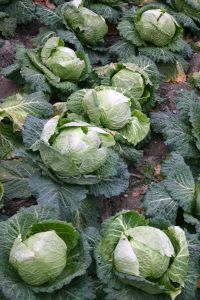 A Dr. Blanc in 1881 wrote the following: “About 1880, a cart driver in a small French village fell off his wagon and – a frequent accident in those times – one wheel rolled over his leg. Two physicians agreed that amputation was necessary; a surgeon was called into consultation, he concurred, and the operation was booked for the next morning. But at 5 p.m. that day the parish priest, Loviat of Saint-Claude, advised the patient’s mother to cover the injured leg with cabbage leaves. Under the influence of this simple dressing, the man slept all night. When he awoke, the family and one of the physicians who arrived to prepare the patient for surgery saw that he could move his leg. The cabbage leaves were removed to reveal a leg without swelling and with improved color. Eight days later, completely well, the man returned to work.”
The common cabbage has been of vital importance to mankind over the 4,000 years of its cultivation. The medical use of cabbage, empirical for centuries, is based upon precise scientific considerations. Hippocrates once remarked that physicians shouldn’t hesitate to borrow from folklore that which can be useful in medicine. We now know, with sound proof, that the folklore of cabbage has stood the test of time and scientific experimentation.
Two other accounts of the medicinal use of cabbage might be of interest: A watchmaker suffered for a year with a painful eczema of both hands, preventing him from working. The lesions were acutely inflamed, and the fingernails were separating, about to fall off. Applications of cabbage leaves twice daily for a few days brought relief from pain, as clear fluid drained onto the dressing. With continued treatment healing took place within two months.
In 1875 a 75 year old man suffered arteriosclerotic gangrene of the lower right leg and foot. The skin was black and the front of the lower leg was decayed. Following the local application of cabbage leaf dressings, the skin changed from black to brown to red, and then returned to its normal healthy color. Three weeks later, writes doctor Blanc, there was a considerable improvement.
It has not yet been discovered why the cabbage leaf has such remarkable healing properties. We only know that the cabbage leaf has a particular affinity for disease-causing fluids, forcing them from the tissues. It even seems that treating small areas of extensive disease benefits the whole, as distant toxins are removed, the cabbage promotes healing and scar tissue, thus preventing complications.
The long history of cures obtained with cabbage, concern many different diseases, including simple and complicated injuries, rheumatic pains, facial neuralgia, headaches, leg ulcer, anthrax, and many others. Cabbage – raw in salads, juiced, or steamed – has incomparable virtues in the most diverse maladies.
Hippocrates had a peculiar affection for this vegetable. Should one of his patients be seized with a violent colic, he at once prescribed a dish of boiled cabbage with salt. Erasistratus looked upon it as a sovereign remedy against paralysis. Pythagoras, and other learned philosophers, composed books in which they celebrated the marvelous virtues of the cabbage. Cato claimed that this plant infallibly cures all diseases; and that he used it as a panacea to preserve his family from the plague, which, otherwise, would not have failed to reach them. It is to the use the Romans made of it, he adds, that they were able during six hundred years to do without the assistance of physicians, whom they had expelled from their territories.
The Romans used cabbage externally and internally for various illnesses, as a purgative, disinfectant, and poultice; Roman soldiers applied cabbage leaves to their wounds.
Rembert Dodens, Dutch physician to the Emperors Maximilian II and Rudolph, wrote in 1557 in his ‘History of Plants’:
“The juice of the cabbage softens the belly and makes one go to stool. It cleans and cures old ulcers. Cabbage juice mixed with honey makes a syrup that heals hoarseness and coughing. The leaves, when cooked and applied to chronic ulcers, modify and heal them, and aid the resolution of tumors and wounds.”
Doctors Merat and Lens of the Faculty of Medicine of Paris wrote in 1829 (Universal Dictionary of Materia Medica): “The cabbage is one of the most valuable acquisitions of man. It combats scurvy, it prevents gout, the tender leaves are applied to wounds, and seeds are indicated for worms.”
A Doctor Roques of the eighteen hundreds protected himself and his family for many years against the epidemic winter diseases by eating a daily salad of cooked cabbage. He recommended the following treatment for cold and laryngitis; One pound of strained red cabbage juice, 3 grams of saffron, 1/2 pound of honey and sugar, the whole boiled to a syrup; 1 tablespoonful is taken in a cup of tea 3 or 4 times daily.
A Doctor Blanc wrote: “Cabbage is the bread and butter of therapeutics. It is the doctor of the poor – the providential physician. Let the incredulous experiment, nothing is simpler (than cabbage); the application is external and easy, the action is prompt and innocuous. One can see it with the naked eye. The virtues of this plant are numerous, and I defy anyone to present a good reason why cabbage should not be used therapeutically.”
The preparation of cabbage for various disorders is as follows: Wash the leaves or soak them for a few minutes in water to which lemon juice has been added. Wipe dry, then use a knife or scissors to remove the central rib and, if the application is planned for an ulcer or sensitive wound, the secondary ribs. Crush the leaves, one by one – with a rolling pin or bottle. The juice appears at the surface of the leaves, ready for application. One, two, or three applications will be required according to the severity of the disease. Cover with a thick cloth and continue the application for several hours, generally overnight, or during the day if pain prevents sleep.
For a very sensitive wound, plunge the leaves for one or two seconds into boiling water, softening them, and reducing the possibility of irritation,
If cabbage leaves are applied to ulcers with swollen irritated margins, soak the leaves first for one-half hour in olive oil. The resulting preparation will soothe inflamed tissues as well as combating infection and aiding healing.
Cabbage leaves applied to an infected wound, ulcer, or oozing eczema should be layered like roof shingles, allowing secretions to drain between the layers. When treating lumbago, joint pain, or various afflictions of the nerve or bladder, poultices of cabbage leaves bring rapid relief. A poultice is prepared as follows: Boil for 20 minutes 2 to 4 cabbage leaves and two whole chopped onions with 3 or 4 handfuls of bran and a little water. After evaporation of the water, place the poultice on gauze and apply hot for one or two hours, or even for the whole night. (Never apply heat to a painful abdomen. Only the physician can properly diagnose the cause of abdominal pain, and the application of heat to appendicitis or infection of the ovary may be harmful.)
Doctor Garnett-Cheney, Professor at the Medical School of Stanford, published a report concerning the use of cabbage juice in the treatment of gastric ulcers. Of 65 cases reported in his series, 62 were cured at the end of three weeks. Cabbage has been recommended to correct anemia of experimental animals induced by an all-milk diet.
In research at the University of Texas. Dr. W. Shive extracted from cabbage a substance he calls Glutamine, useful in the treatment of alcoholism and peptic ulcer.
Cabbage has been found to be of infinite value for pregnant women, and for patients with anemia, fatigue, infections, intestinal parasites, stones, and arthritis.
We list now some of the afflictions for which the cabbage has been used over the centuries to bring relief:
Acne: Apply a lotion of freshly prepared cabbage juice preceded, if desired, by the application of leaves. The eating of cabbage leaves or juice is also helpful.
Alcoholism: Eat cabbage, steamed or raw and drink the juice.
Anemia: Drink one or two glasses of cabbage juice daily.
Burns: Apply mashed cabbage leaves to the burn area to relieve pain and speed healing.
Cirrhosis of the liver: Drink cabbage juice and eat raw or steamed cabbage.
Colitis: Apply 3 or 4 layers of cabbage leaves over the abdomen each evening and secure in place to be left on overnight. Drink also the juice between meals.
Constipation: Several glasses a day of cabbage broth.
Diarrhea: Apply cabbage leaves to the abdominal region during the day and a fresh application for overnight and drink a cabbage broth.
Headache: Apply cabbage leaves to the forehead and nape of the neck and leave on overnight. Applications of the leaves over the liver may also be necessary.
Insect Bites: Rub a crushed cabbage leaf over the bite.
Kidney disease: Apply cabbage leaves over the kidney areas and leave on overnight and also for a few hours during the day
Menses, painful: Apply cabbage leaves over the lower abdomen for several hours.
Sprains: Tie three or four thicknesses of cabbage leaves around the sprained area and leave on over night.
Next time you see the lowly cabbage plant consider that over the centuries many people have derived much relief from physical ailments through using it.
Cabbage
Brassica oleracea
The health benefits of the cabbage are now well known and still, this vegetable does not seem to be present in our diet. Studies suggest that it should be brought to our table 2 to 3 times a week. If you are reluctant to eat some because of the flatulences it produces, you will see that they are some tips to help overcome this trouble.
Health benefits
In the middle ages this vegetable was called “the drug of the poor”.
There is few vegetables that have more healing properties than cabbage. Unfortunately, nowadays, people prefer to rely on drugs rather than healing food. I do not say that you should not use medication but just that for some cases cabbage could be a great help but we do not even consider it. If you are interested, many books have been written about it and its medicinal uses.
The most interesting property of this vegetable is its power to reduce the risk of developing a colon cancer. Studies have shown that population who eat large amounts of cabbage have low rate of colon cancer. This is due to its high content in fibers and chemicals. Fibers help our intestines to stay healthy by increasing our transit movements. Cabbage also contains chemicals that inhibit tumor growth and protect cells against free radicals.
Some of its chemicals are believed to speed up the body’s metabolism of estrogen and therefore reduce the incidence of breast, uterus and ovaries cancer.
Cabbage is also an excellent source of vitamin C and beta-carotene (vitamin A precursor). These anti-oxidants are helpful to fight free radicals that are circulating in our body and increase our process of aging.
The high amount of beta-carotene may cut the risk of cataracts.
Raw, the cabbage is a good source of folic acid which lowers the risk of having babies with Spina bifida.
Juiced cabbage promotes healing of some ulcers.
Cabbage also reduces risk of heart disease and stroke, alleviate rheumatisms and skin problems.
On top of all these properties, this vegetable is low in calories.
Caution:
Cabbage reduces absorption of iodine. If you do eat more than 2 to 3 times a week this vegetable, be sure you do not suffer from thyroid disorders and ensure your intake of iodine.
How to eat it?
First of all, how to avoid the flatulence?
It is really easy and adds a nice flavor to your dish too. Just add a few seeds of caraway/cumin or fennel (or both) before cooking. The cabbage will be more digest and you will not have the unpleasant odor in your kitchen for days.
There are many ways to prepare a cabbage.
Raw, shredded in small pieces, you can add it to any of your salad. It can be a salad by itself with a few pieces of apple, raisins, cheese…
When shredded you might want to fry it alone or with a cereal.
Cabbage is wonderful for winter’s recipes such as “pot-au-feu”, soups or even stuffed.
It can be boiled, steamed… There is not limit to creativity.
Cabbage can also be eaten as sauerkraut. This recipe comes from Germany. It consists of soaking it in salt brine and then let it ferment. Sauerkraut provides microorganisms that are good for our intestinal flora but is also rich in sodium. To lower the sodium content rinse it before cooking it.
Avoid cutting the cabbage in advance otherwise you would lose its vitamins, especially vitamin C.
The leaves in the inside are usually well tight and clean. You do not have to wash them. Just remove the exterior leaves that might be spoiled and rinse the whole cabbage under running water. You can then prepare it.
The simplest way to cut it is with a large and sharpen knife to cut it in half and then in quarters. You might want to remove its core from each quarter since this part is usually hard.
Depending on what you want to do with it, you can slice it in small pieces, leave it in quarters or cut it again in half.
Do not cook cabbage in an aluminum pot which causes a chemical reaction that discolor the vegetable and alter its flavor.
Peak season
Cabbage is available all year round but its peak season is the fall.
Storage
Cabbage is one of the vegetable that keeps well. Placed in the refrigerator or in a cold place, a whole cabbage can be store for at least two weeks. If the cabbage has already been cut, the rest cannot be stored more than two or three days.
Nutritional values
| USDA Nutrient Database for Standard Reference, Release 13 (November 1999) | |||
| Nutrients | Units | Cabbage – raw | Cabbage – cooked |
| Water | g | 92.15 | 93.60 |
| Energy | kcal | 25 | 22 |
| Protein | g | 1.44 | 1.02 |
| Total lipid (fat) | g | 0.27 | 0.43 |
| Carbohydrate | g | 5.43 | 4.46 |
| Fiber, total dietary | g | 2.3 | 2.3 |
| Minerals | |||
| Calcium | mg | 31 | 46 |
| Iron | mg | 0.17 | 0.84 |
| Magnesium | mg | 8 | 24 |
| Phosphorus | mg | 15 | 59 |
| Potassium | mg | 97 | 292 |
| Sodium | mg | 8 | 26 |
| Zinc | mg | 0.09 | 0.38 |
| Copper | mg | 0.012 | 0.043 |
| Manganese | mg | 0.117 | 0.218 |
| Selenium | mcg | 0.6 | 1.9 |
| Vitamins | |||
| Vitamin C | mg | 20.1 | 74.6 |
| B-1 (thiamin) | mg | 0.057 | 0.055 |
| B-2 (riboflavin) | mg | 0.055 | 0.113 |
| B-3 (niacin) | mg | 0.282 | 0.574 |
| B-5 (pantothenic acid) | mg | 0.139 | 0.508 |
| B-6 (pyridoxine) | mg | 0.113 | 0.143 |
| Folate | mcg | 20 | 50 |
| B-12 | mcg | 0 | 0 |
| Vitamin A | I.U | 132 | 1318 |
| Vitamin A | mcg RE | 13 | 139 |
| Vitamin E | mcg ATE | 0.105 | 1.69 |
| Lipids | |||
| Fatty acids, saturated | g | 0.053 | 0.054 |
| Fatty acids, monounsaturated | g | 0.030 | 0.024 |
| Fatty acids, polyunsaturated | g | 0.196 | 0.167 |
| Linoleic acid (18:2) | g | 0.085 | 0.038 |
| Alpha-linolenic acid (18:3) | g | 0.110 | 0.129 |
| Cholesterol | mg | 0 | 0 |
CABBAGE: NATURAL HEALING GUIDE
Many varieties of cabbage- white, red, oxheart and Chinese-and their leafy vegetable cousins, broccoli, Brussels sprouts, kale, Savoy and kohlrabi, have long been known for their therapeutic effects. An important food for a well-balanced, healthy diet, cabbage is rich in proteins, vitamins, minerals and roughage.(Kale, Savoy cabbage and broccoli are particularly nutritious). Thus, the vegetable is highly recommended for treating most gastrointestinal illnesses. Plus, eating vegetables from the cabbage family has been linked to the prevention of cancer. Usually available at reasonable prices all year long, these vegetables can be prepared in many different ways. With most varieties, you can eat the outer, darker cabbage leaves. Remember that cooking often removes valuable nutrients, so eating cabbage raw is your best bet nutritionally.
Quality makes a difference
When you buy cabbage, choose only fresh, preferably organically grown heads with intensely green outer leaves. The greatest numbers of minerals are concentrated in these outer leaves, so they should always be used when you prepare the vegetable.
Therapeutic Effect
Cabbage is rich in minerals, especially sulfur compounds and magnesium. For this reason it is favored in the treatment of mineral deficiencies and can restore vitality and fitness. It is low in calories and is considered a valuable nutritional component in diets to combat obesity and constipation. Cabbage is also effective in calming the nerves and promoting relaxation and sleep. Eaten raw, it coats the digestive tract with a protective layer of mucus, making cabbage juice a valued treatment for those with ulcers.
Components
Cabbage contains protein, fat, carbohydrates, roughage, sodium, potassium, magnesium, calcium, iron, vitamin C and sulfur. Savoy cabbage, kale and broccoli have an especially high mineral and vitamin content.
Cabbage juice for preventing goiter
Cabbage juice contains biologically active compounds that affect the thyroid gland. They inhibit iodine absorption during hyperthyroid activity and thus counteract goiter formation, which is triggered by this hyperactivity. If you have thyroid problems, consult your doctor before taking cabbage juice. If you have hyperthyroidism without goiter formation, do not drink the juice.
Cancer prevention
Members of the cabbage family, especially when eaten raw, may play a strong role in preventing cancer. The vitamins in the vegetables act as antioxidants, neutralizing damage causing free radicals that may be linked to cancer. Plus, the roughage in cabbage cleanses the intestines of toxins, while its germicidal mustard oil helps guard against infection.
Extra tip : If you have a sensitive stomach or intestines, season cabbage dishes with caraway or fennel seeds, which will help alleviate flatulence.
Used for regulating hyperthyroidism and relieving pain from headaches, migraines, arthritis, varicose ulcers, constipation and mineral deficiency.
Methods of administration
Fresh cabbage juice
The juice promotes the healing of stomach and duodenal ulcers. To obtain 1 qt. of cabbage juice, you’ll need about 4 ½ lb. of cleaned white cabbage. Shred the cabbage in a food processor as finely as possible and then extract the juice from the cabbage strips in a juicer. Drink ¾ to 1 cup of the juice 4-5 times a day.
Compresses for wounds
- Several leaves of savoy cabbage or kale (preferably outer leaves)
- 1 piece gauze
- 1 gauze bandage
Use this compress to treat poorly healing wounds as well as varicose ulcers. The cabbage cleanses the wounds by drawing out secretions, so use each set of leaves only once! Begin by washing the cabbage leaves with cold water; pat dry. Spread out the leaves and press them lightly with a rolling pin until they are soft and flat. Cover the wound or sore with the cabbage leaves, place the gauze on top and apply the bandage. Keep the dressing on overnight and repeat the application, if necessary, in the morning. If the healing process has begun, let the wound air dry.
 ĐỌC VUI VÀ SUY NGHĨ
